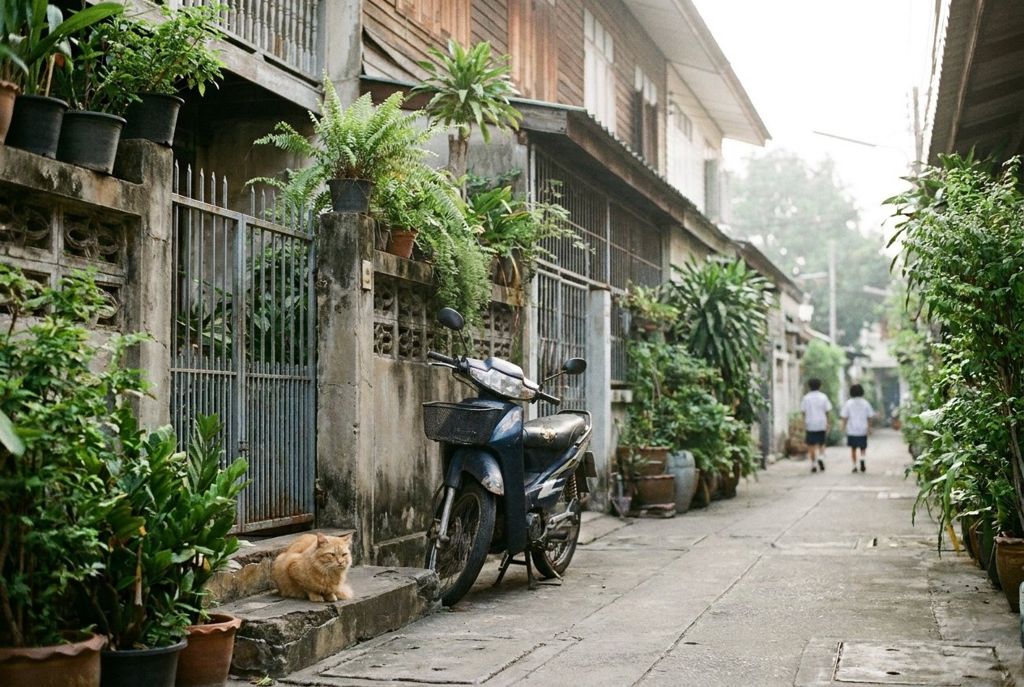
Sukhumvit Soi 63 runs parallel to Thong Lo, a single stop along the train line. It has its own pace, a bus terminal for the east coast, and lanes that link the two.
- From the BTS
- One stop east, Ekkamai station
- Best time of day
- Late morning
- Getting there
- BTS one stop east to Ekkamai
- Bring
- Water, small notes, your bus ticket details
The lanes between the two sois are quiet by late morning, with potted plants outside gates and cats on warm steps. Watch for motorbikes easing out of driveways.
Ekkamai is Sukhumvit Soi 63, the next major soi east of Thong Lo. Like its neighbour, it begins on Sukhumvit Road under the BTS line and runs north for a few kilometres toward Phetchaburi Road. The two roads are close enough to walk between, and many people who live on one spend plenty of time on the other.
One stop along the line
Ekkamai station sits between Thong Lo and Phra Khanong on the BTS Sukhumvit Line. The ride from Thong Lo takes a couple of minutes. Walking along Sukhumvit Road between the two stations is also easy, about a kilometre under the elevated tracks, though the pavement is crowded and the traffic noise is constant.
From the station, the soi heads north on one side of Sukhumvit Road. The bus terminal sits on the south side, right beside the station. Signs at the exits point the way.
The Eastern Bus Terminal
The Eastern Bus Terminal, often just called Ekkamai by locals, is where many long-distance buses leave for the east coast. Routes run to Pattaya, to Rayong, and to Ban Phe, the small port where ferries cross to Ko Samet. Buses also head further along the coast.
The terminal is a working place, not a destination. Ticket counters are grouped by route and company, with destination names shown in Thai and often in English. Buy your ticket at the counter for your route, then wait near the departure bay shown on it. Staff are used to travellers and will point you in the right direction if you show your ticket.
- Arrive early, especially on Friday afternoons and before public holidays, when seats sell out.
- If you are heading to Ko Samet, check which bus goes all the way to Ban Phe pier and confirm ferry times separately.
- Keep a jacket handy. Air-conditioning on long-distance buses can be fierce.
The terminal is one reason the area feels a little less polished than Thong Lo. People arrive with bags, wait for connections, and head off again.
A few habits make the trip smoother. Write your destination down in Thai, or keep it on your phone screen, to show at the counter. Hold on to your ticket until the end of the journey, since staff sometimes check it on board. Eat before you leave or carry a snack, because stops along the way are short. Toilets are in the terminal building; use them before you board, as not every bus has one that works well.
Coming back into Bangkok, buses from the coast pull into the same terminal. From there the BTS is a short walk, and Thong Lo is one stop west.
Also on the blog: Two parks within reach: Benchasiri and Benjakitti
Walking the soi itself
North of the station, Ekkamai has a similar layout to Thong Lo end to end: a main road with numbered side sois branching off on both sides. Shophouses, offices, schools, and residential buildings line the way, and food carts set up on corners and in gaps.
The main road can be busy with cars, and the pavement narrows in places, so walk carefully. Side sois are often quieter, with townhouses and small apartment buildings set back from the street.
Like Thong Lo, Ekkamai is long, and the soi has its own buses and motorbike taxi stands. Use them when the heat sets in. Agree on the fare before getting on a motorbike taxi, and say the side soi number clearly.
Crossing through the lanes
Between Thong Lo and Ekkamai lies a web of smaller lanes. Some side sois from each road meet in the middle. Others stop at a wall or a gate, so walking through takes some patience. A phone map helps, but even then a lane that looks open on the screen can turn out to be private or blocked.
These connecting lanes show a quieter side of the area. You will pass houses with potted plants and small shrines out front, laundry drying on railings, and the occasional cat asleep on a step. Keep your voice low, do not photograph people at their front doors without asking, and give way to anyone on a motorbike.
Walking across is often faster than going back to Sukhumvit Road, especially if you are near the middle or northern ends of either soi. It is also a pleasant way to see both neighbourhoods in one morning.
When to come over
Late morning is a good time to walk the lanes, after the rush of school and work traffic but before the worst of the afternoon heat. Evenings bring more people out to eat, and the main road fills with cars again.
The cool months make the walk across far more comfortable. In the rainy season, carry an umbrella and expect the lower stretches of some lanes to pond after a storm. Thong Lo through the year covers what to expect month by month, and the same weather applies one soi over.